Detroit (Sculpture)
Light, and Rebirth
Role
Client
Interstate road sign, recycled aluminum, computer-controlled lighting
Duration
2006-2007, 2025
Detroit
Created in early 2007, "Detroit" is a monumental sculptural work that transforms a damaged interstate sign into something theatrical, electric, and deeply human. Think giant highway sign meets movie marquee: glitz, lights, and raw grit, all scaled beyond ordinary life. First exhibited in a solo show at the Lansing Art Gallery, the piece carries both the visual force of public infrastructure and the emotional charge of survival.
The work began with the discovery of a nearly twenty-foot-wide road sign that had once hung above Interstate 96 before it was damaged and removed. Found later in the muddy back lot of a scrapyard, where it was being used to keep a ten-ton machine from sinking, the sign had already lived several lives. What stood out immediately was its scale and presence. Even caked in mud, it suggested possibility. That instinct became the foundation of the piece: the belief that something designed for one purpose can be remade into something else entirely.
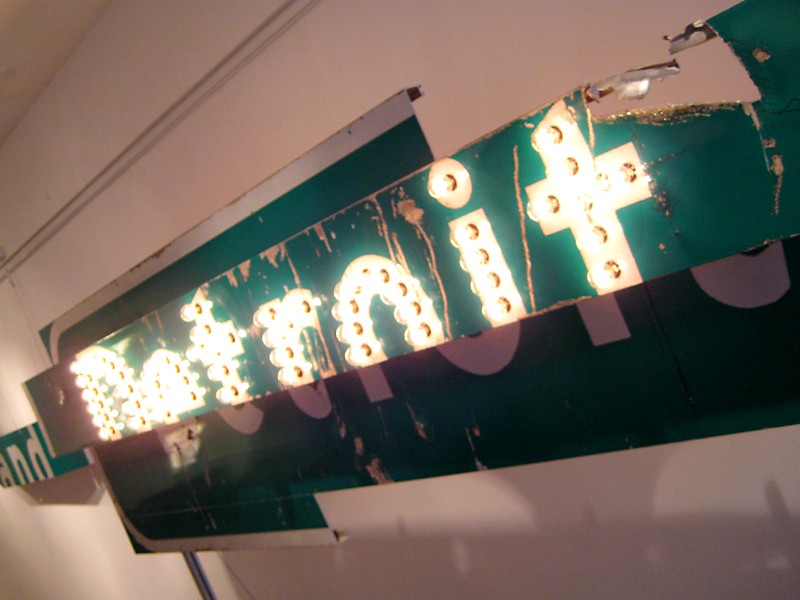
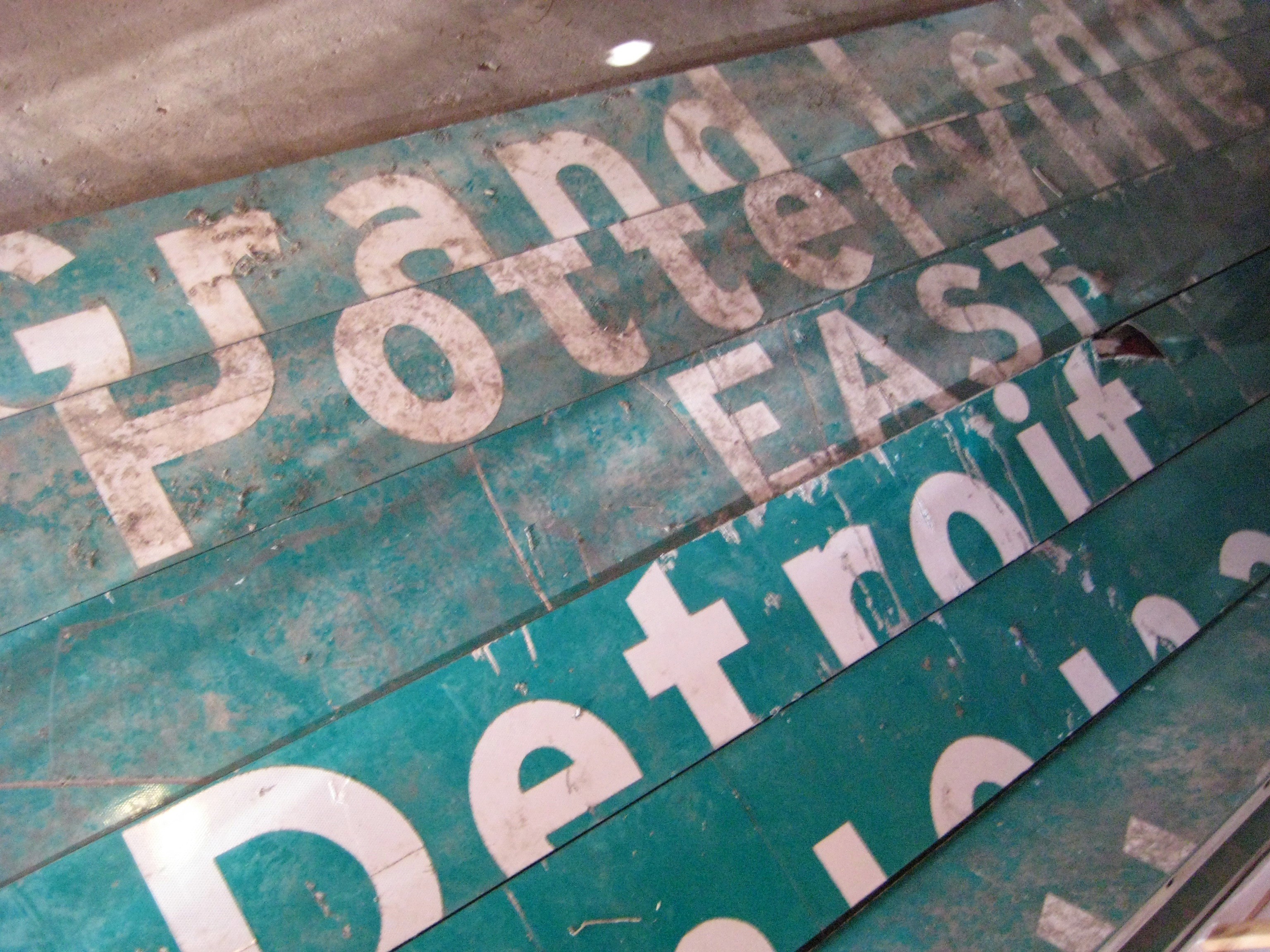
Built from the original interstate sign and additional recycled aluminum, Detroit reflects an interest in material rebirth and the expressive power of industrial salvage. The sculpture’s title is direct, but that directness matters. “Detroit” does not need embellishment. It evokes history, culture, struggle, invention, and the determination to keep going. Those ideas are embedded in the work’s surface, especially in the large scar torn through the sign above the “t” when it was damaged over the freeway. Rather than erase that wound, the artist chose to emphasize it. The gash became central to the sculpture’s meaning: evidence that even a blow to the forehead could not bring it down.
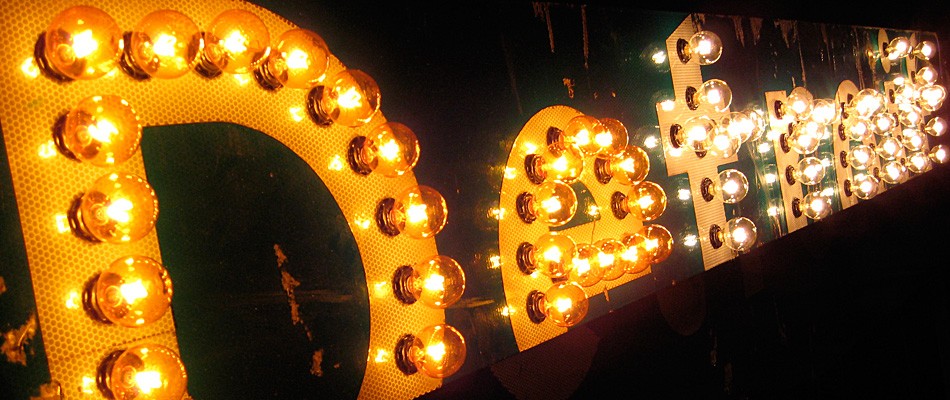
Light is essential to the piece’s impact. More than 130 computer-controlled bulbs are built into the work across eight separate lighting channels, allowing it to flash, chase, and twinkle like a theater marquee. That combination of illumination and weathered industrial material creates a tension at the center of the sculpture. It is both battered and radiant, functional and theatrical, wounded and triumphant. For viewers familiar with Detroit, the piece can feel especially resonant, suggesting that a place or a person can inhabit struggle and success, darkness and light, at the same time.
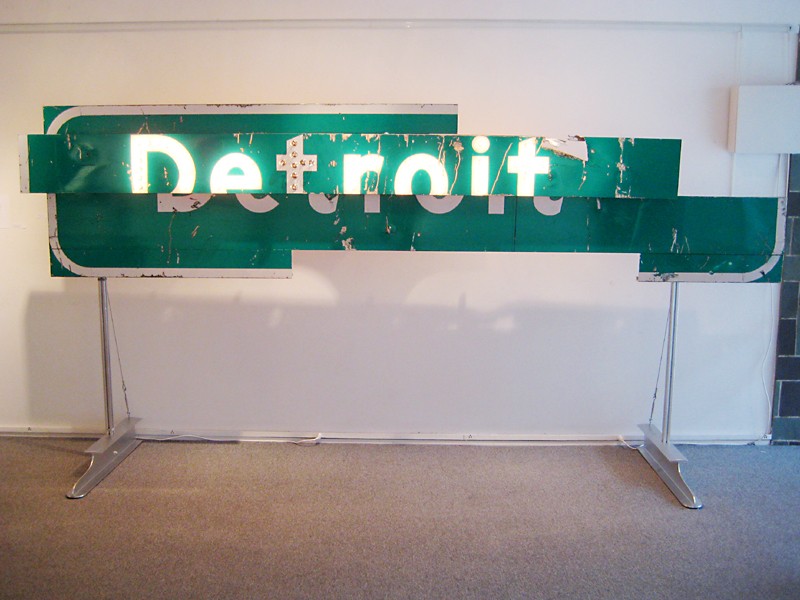
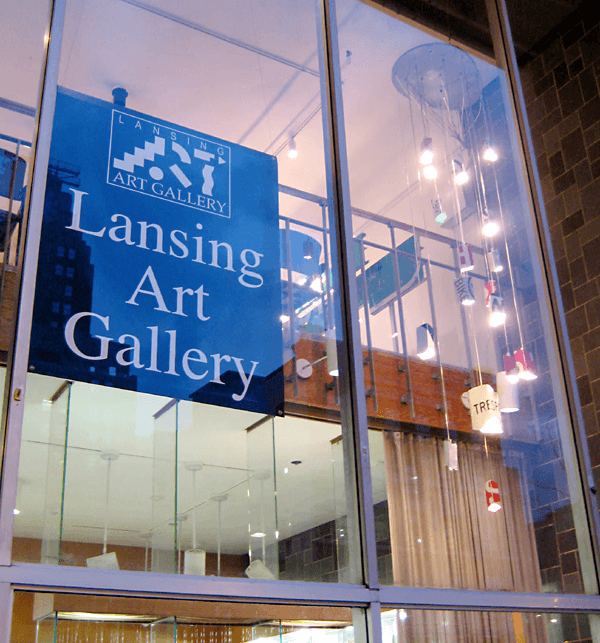

The sculpture also holds a special place in the artist’s practice. Though technically a giant wall-mounted lamp, Detroit stands apart as one of the few purely sculptural works made during that period, and it remains a cornerstone piece. First shown during Lansing’s Silver Bells in the City, it was installed prominently so that audiences could experience it in dialogue with the festival lights outside. Its programmed light sequences even responded to the energy of the crowds and marching bands beyond the gallery windows, turning the exhibition into something immersive and alive.
Years later, Detroit continues to evolve in meaning. Created at a moment when reductive narratives about the city were beginning to fade, the piece was never meant to be an image of ruin. Instead, it was always about transformation: damage met with craft, loss answered by reinvention. It remains in the artist’s personal collection, still capable of prompting a smile each time it is passed. Its spirit can be summed up in a single line: Grit makes it beautiful.